Saturday, October 17, 2015

Putong Village, Mondulkiri, Cambodia - 12 & 13 October 2015

Mondulkiri is also known for her robust coffee. Due to heavy afternoon showers, however, our tour to a coffee plantation was abruptly shortened. After a coffee/tea break there, our group headed back to Sen Monorom, and we said our goodbyes at the Green House Bar and Restaurant. The minivan then took me to another Bunong community Putong Village where I stayed the night and had dinner.

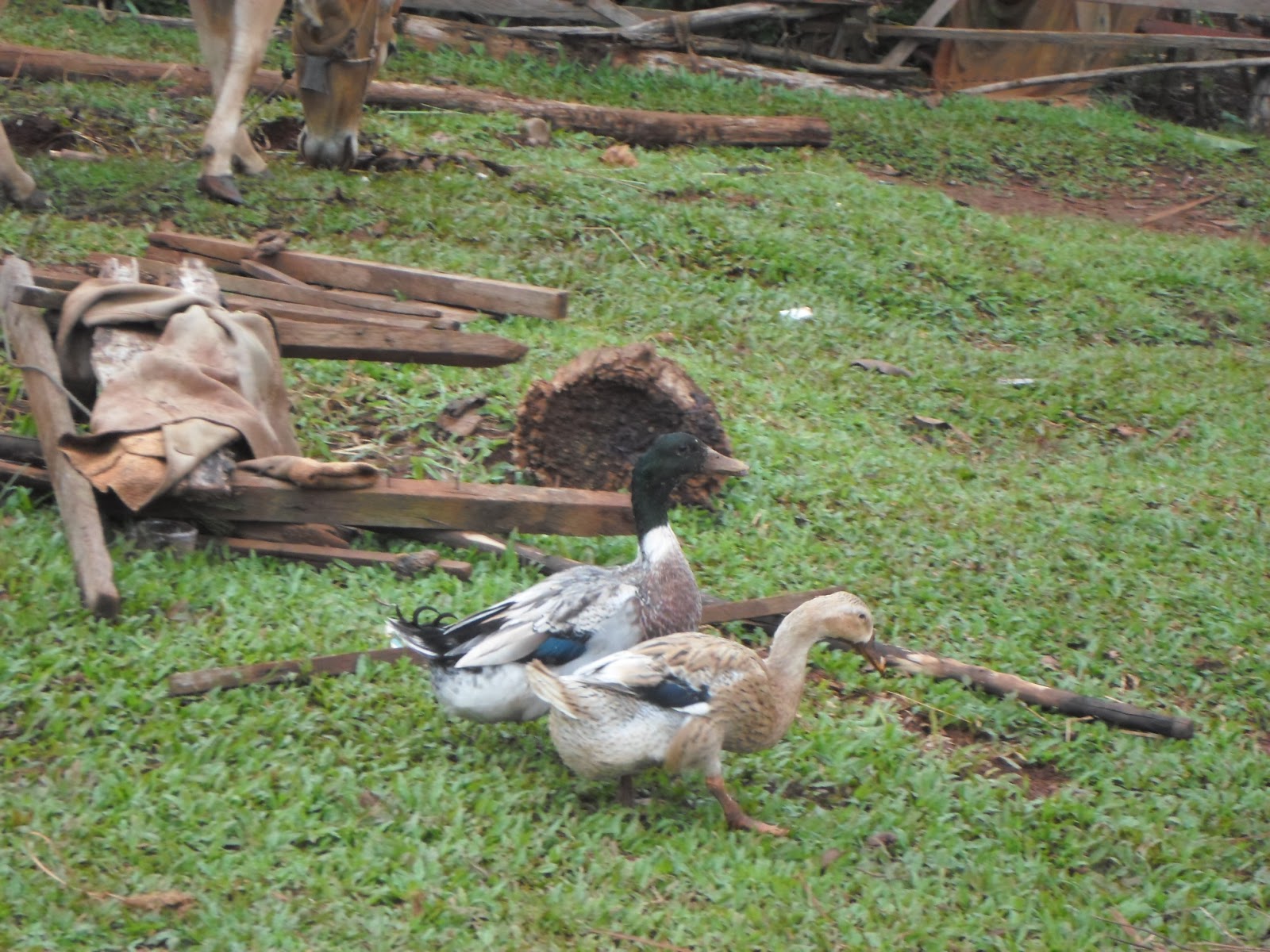
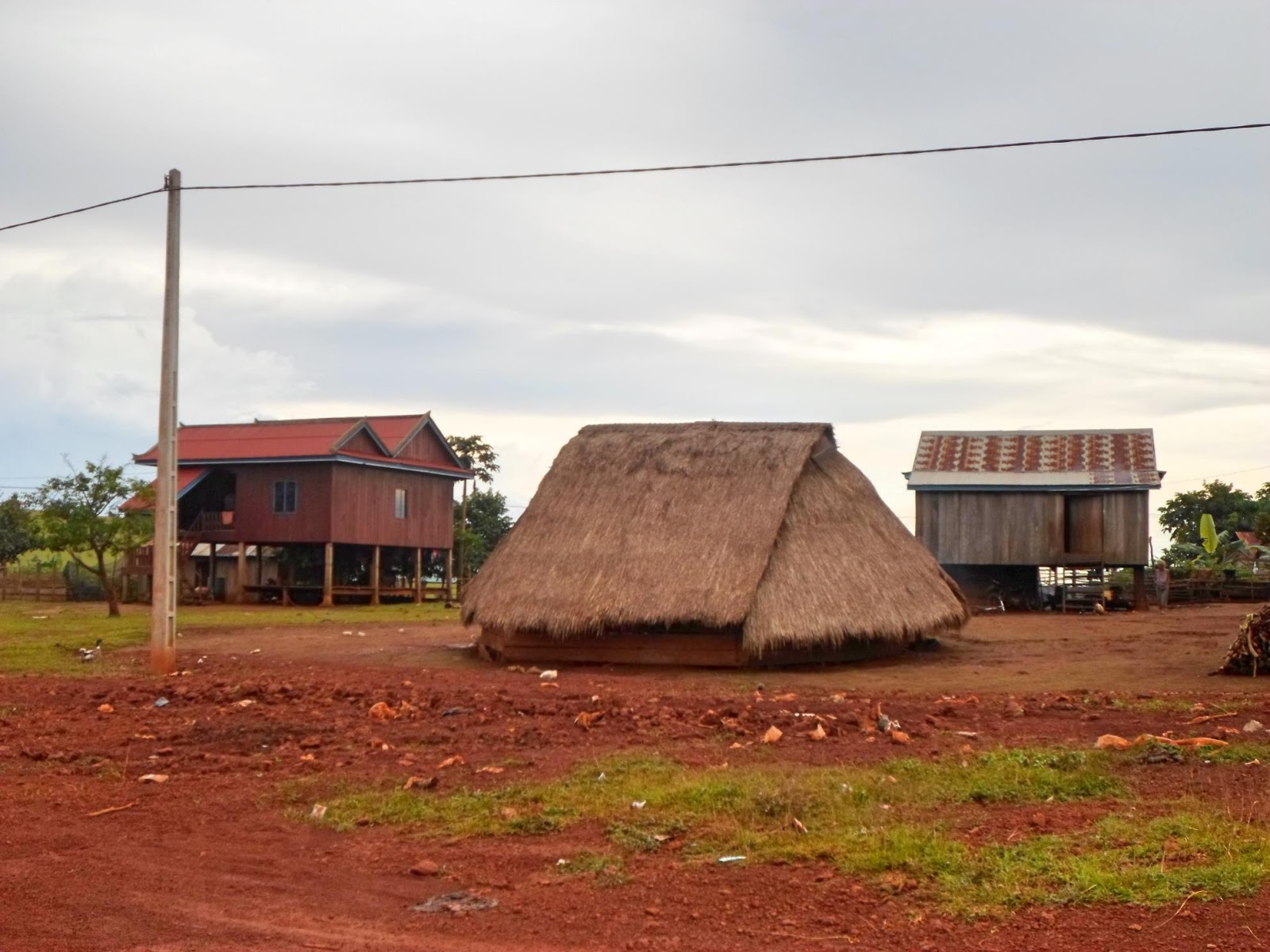
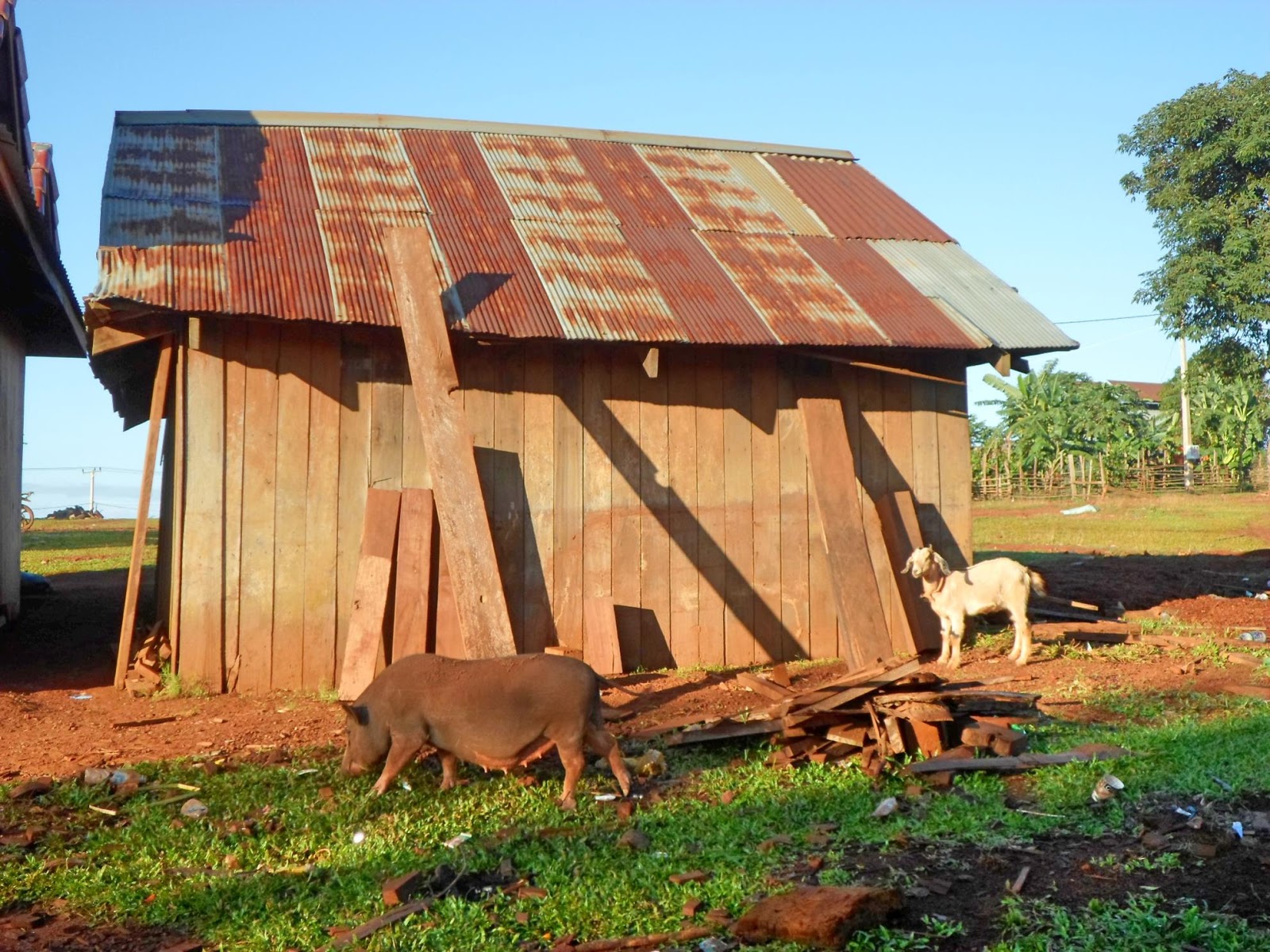
The community at Putong Village seemed larger than Pulong Village. In addition to several garden plots, I saw plenty of farm animals: pigs, chickens, ducks, goats, dogs, and buffaloes. After dinner and jar wine with the host family, a few inebriated fellow travelers and I walked to a different community nearby to join in at a party. The night walk there was rather treacherous as there were no street lamps save for our headlights. I was relieved that we made it; there was music, dancing, and drinking at the party. It reminded me of the dance I participated in at Amantani Island in Lago Titicaca in Peru several years ago. Unlike the indigenous people in Lago Titicaca, the Bunongs have modernized their attire. None of them were in their traditional costumes. Most men wore t-shirts and jeans, and some even sport a baseball hat, while the women mostly wore buttoned-shirts or t-shirts and cotton pants. They looked like any Khmer person to me. When I asked the guide how they could tell if someone was a Bunong, he answered, "Language". The Bunong people speak a local dialect that is different from Khmer. And so I digress. Anyway, the Bunong dance seemed rather prosaic - it was a mix of cha-cha and line dancing, and they danced in circles. It was a good thing that the party ended early at 9 P.M., and we got a ride back to Putong Village (from the owner of Green House Bar and Restaurant who came to the party as well) as I was dreading the walk back in the dark and wary of angry dogs.

I slept rather well in a hammock inside a traditional Bunong house made of rattan, bamboo, elephant straw, and wood. However, the temperature dropped tremendously between one and five in the morning, and the thin blanket they provided was not thick enough to keep me warm. It was good foresight that I wore my jacket to sleep. I was also glad that I put on ear plugs for the night as I heard none of the snoring that went on under the same roof.

Above right: These village boys were playing soccer/football with slippers or flipflops

Above left: This boy on the left had torn long pants held up with strings tied around his knees

Above right: A village convenience store

Above right: My male host ~ he has 10 children and 40 grand kids; they all live in the same community

Above left: My female host; Above right: Dinner at the host family

Above left: Our guides and hosts said a quick prayer before they offered us the jar wine; Above right: The hammock I slept in in a traditional Bunong house

Above left: Bunong women dancing at a party; Above right: Good morning from Putong Village!

Above right (from left): Aaron (from Australia), Mateo (from Italy), Vincent (from Switzerland), and our host

Above: A primary school near Putong Village. The new school season begins Nov 1st. The building of this school was funded by AusCam Freedom Project from Australia.


Pulong Waterfalls and Asian Elephants, Mondulkiri, Cambodia - 12 October 2015

After the brief visit to Pulong Village, we picked up a few banana tree stumps and headed out to see a few Asian elephants in the forest. I wasn't sure where we were dropped off, but the trek down from the road to the river was steep and somewhat challenging considering that each of us had to carry a banana tree stump, which I imagined to weigh between 2-4 KG each. When we arrived at the bamboo hut near the river, we set down our stuff and went to see the Pulong waterfall and river. It was pretty. Then at around 12 PM or so, Heng introduced us to some elephant "rules" and etiquette before we went in search of the elephants.

The 3 female Asian elephants we saw were: Chi Wat (92 years old), Chi Chering (65 years old), and My Koon (57 years old). Chi Wat used to work for the Khmer Rouge by carrying land mines, logs, and rice, among other things. Unlike many elephants in that period, she survived the land mines. Each of these three elephants has a distinct personality. For example, My Koon is known to be the greedy eater and Chi Wat the queen (rightfully so in my opinion). They are also known to be temperamental with tourists. On a good day, they may allow you to get close and touch them, but on a bad day, they may whack their trunk or charge at you.

When the elephants appeared, I was petrified for their sheer size even though they had a mahout rider each. These domesticated elephants have the power to hurt if they so will. I was out of my comfort zone and being in such close proximity to them put me off balance for a bit. I was standing right in front of Chi Wat, the oldest, when she approached me for the bananas I was holding. Instinctively, I stepped to her left to feed her a banana at a time. As she was the fussy one, she preferred to be fed directly to her mouth, not her trunk. It grossed me out to put a banana in Chi Wat's slimy tongue. She was also covered in mud, so I was being a little prissy and afraid of getting mud on myself. When I ran out of bananas, I had a mild panic attack as I thought she was going to whack her trunk at me. I fled and watched her from a distance. By that time, I was done with feeding bananas to the elephants and remained content at just watching them from a few feet away. Slowly, I warmed up to the elephants and mustered enough courage to touch them. Their grey skin felt like sandpaper, and they have deep creases and folds in some parts of their skin, including thick black hairs.

When our group ran out of bananas, the elephants left and foraged for bamboos in the area. They got bored of us humans, I suppose. Soon the only female mahout in the community gave us some insights as to the history and lives of these elephants. She said that these elephants are spiritual creatures that can react to any bad deed done by the mahouts. There was a time, for example, when these 3 elephants cried persistently and refused to eat the bananas that a group of tourists had brought. The mahouts and guides were surprised and concerned. They learned later that the elephants were upset that the mahouts had killed and eaten a snake earlier. The mahouts had to make amends to the elephants (I forgot how) and all was good in the end. These mahouts, most of them male, take turns to spend a week with the elephants. Their job includes walking with, cleaning, and ensuring that the elephants don't wander off from the forest and out into the village.

The following are some interesting facts about these Asian elephants:
  1. Asian elephants are endangered. Only about 260 of wild elephants exist in Cambodia's forests.
  2. The domesticated elephants have lived with the Bunongs for centuries. Many were used to clear forests for farm lands, to carry heavy things, and for a while, to carry tourists (this practice has since been disallowed). These elephants are now retired, but through the initiative of the Green House Bar and Restaurant's Elephant Community Project, the community has found a way to earn some income by allowing tourists to see the elephants (but not ride on them). By doing so, tourists indirectly save the forests, the elephants, and the community to which they belong to.
  3. The Bunongs do not breed their domesticated elephants as they think it is wrong; they akin it to in-breeding. Once these aged domesticated elephants die out, the Bunongs will be left with no elephants unless they have permission from the government to catch a few wild ones in the forests.
  4. These Asian elephants are smaller than the African elephants (in ear flaps and height). They have 18 toe nails in total: 10 in front and 8 in the rear.
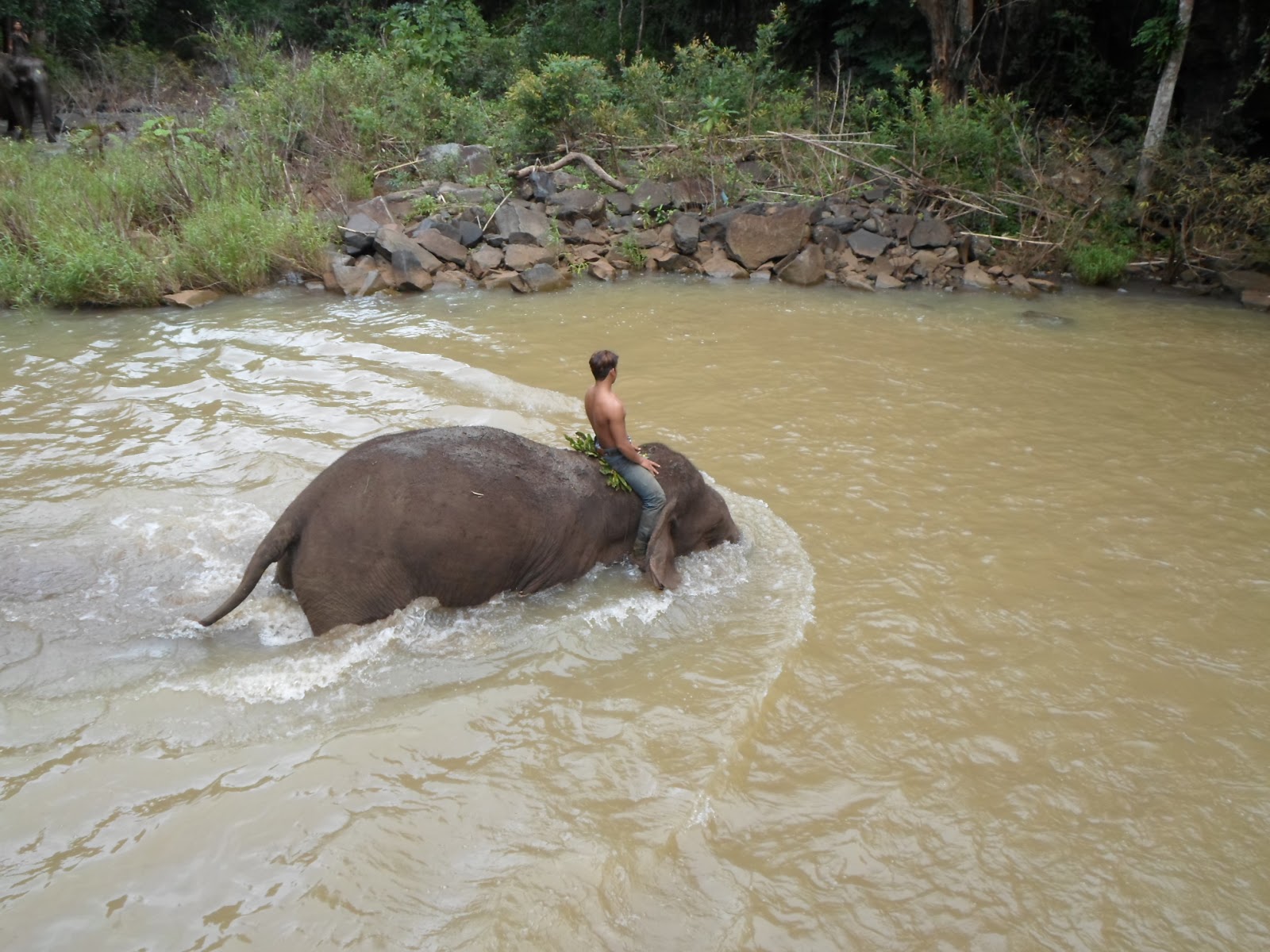
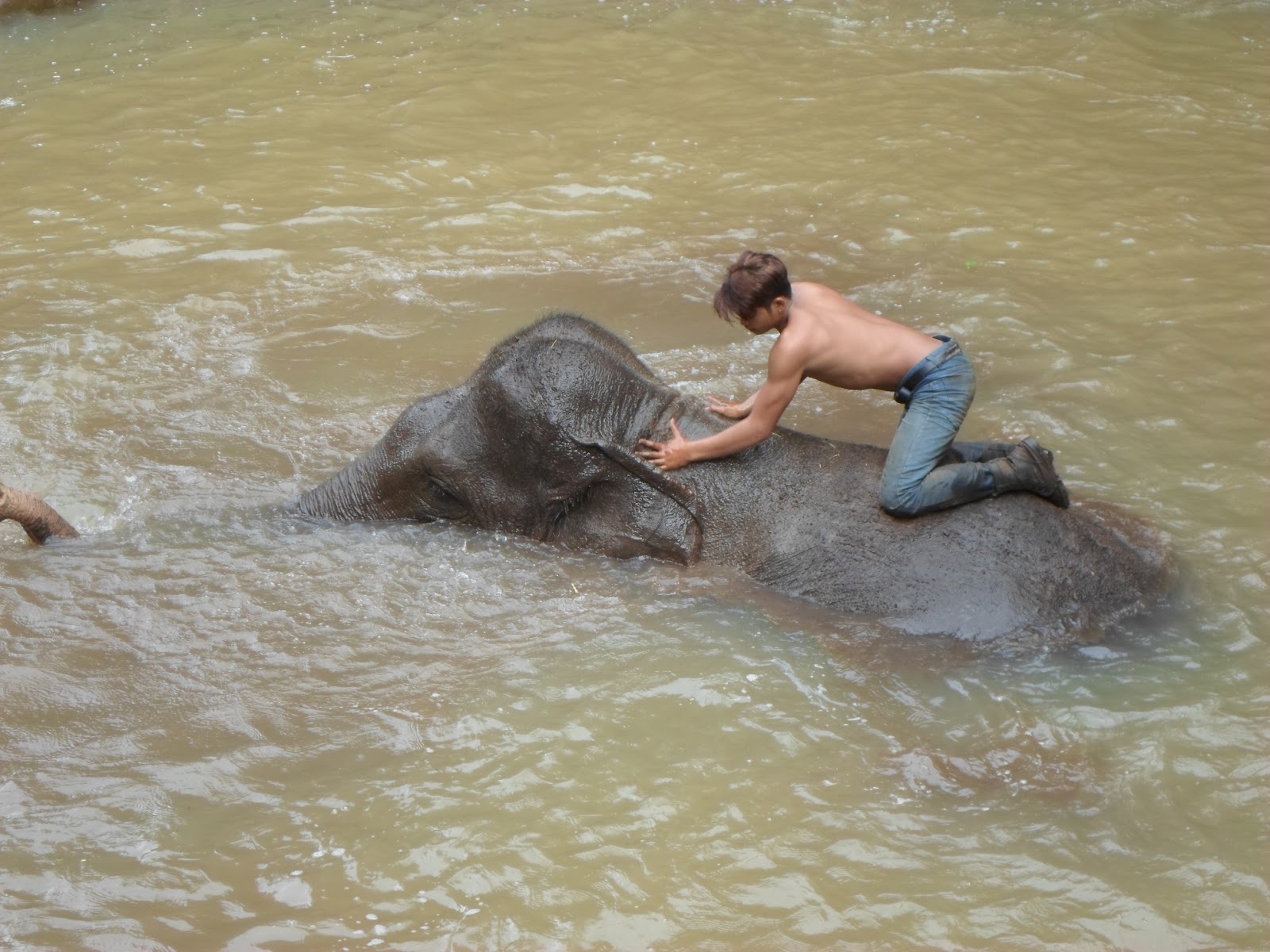
Next we headed back to the river rock area to have lunch and chill. Many of us took an afternoon siesta, and we woke up just in time to catch the 3 elephants walking to the falls for their bath. When they arrived, all of us jumped into the water to participate in cleaning them. Never before have I imagined myself to be in the same waters as the elephants and scrubbing mud off of them! It was a mind-blowing and incredible experience.

Finally, after their bath, we walked up to the hut to give the elephants their treat - the juicy banana tree stumps we so strenuously lugged down for them. The elephants chewed them contently, and it was a happy sight for all. I'm glad that the elephants behaved well and did not harm any of us. They were enormous and mystical, yet also vulnerable, gentle, and spiritual. There's no doubt these elephants were the highlight of this tour.


Next post: Putong Village, Mondulkiri, Cambodia - 12 & 13 October 2015
Previous post: Sen Monorom and Pulong Village, Mondulkiri, Cambodia - 11 & 12 October 2015